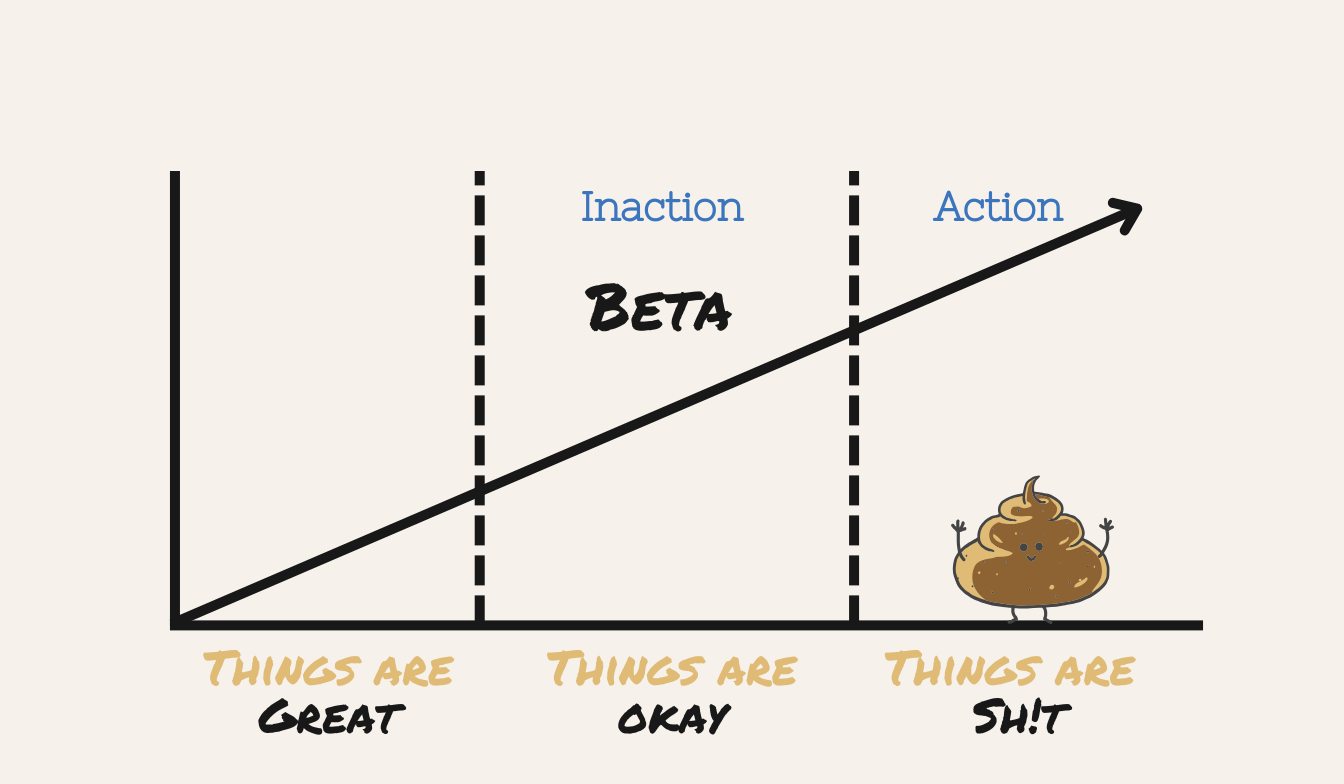
Have you ever been stuck in overthinking, weighing every possible outcome, only to realize later that the answer was far simpler? That’s where Occam’s Razor comes in. This powerful mental model helps you cut through unnecessary complexity so you can make faster, clearer decisions.
In this post, I’ll share what Occam’s Razor is, where it comes from, and how to use it as a mindset framework for decision-making, problem solving, and shifting your perspective in both your personal life and your career.
What is Occam's Razor?
Occam's Razor is a mental model that comes from a 14th-century English philosopher named William of Ockham. His idea was simple: when faced with multiple explanations or solutions, the simplest one is usually the best. It is not about ignoring complexity, but about removing unnecessary assumptions that make a problem harder than it actually is.
Think of it as a mindset framework for cutting away the clutter so you can see what really matters. It is a way to filter out noise and focus on the most straightforward path to a solution.
Balanced thinking is the key to Occam’s Razor. You are not oversimplifying to the point of missing important details, but you are stripping away what is unnecessary so you can focus on the essentials.
"Everything should be made as simple as possible, but not simpler."
Why Simplicity Reduces Overthinking in Decision-Making
We often mistake complexity for intelligence. I used to believe that the more detailed or intricate my thinking was, the smarter my decisions would be. But the opposite is often true. Complexity can be a mask for confusion, while simplicity brings clearer thinking.
When you use Occam's Razor in problem solving, you remove excess variables that are not directly contributing to the solution. This is powerful because overthinking often comes from getting lost in an endless loop of infinite possibilities that do not matter. By focusing on the simplest solution that fits the facts, you reduce mental overload and decision fatigue.
Occam's Razor is not about being lazy or taking shortcuts. It is about using a clear, logical mindset shift to avoid drowning in unnecessary details.
How to Apply Occam's Razor in Your Personal Life
Here are three practical ways to use Occam's Razor in your everyday decisions:
1. Relationship misunderstandings
If someone has not replied to your message, your mind might run through dozens of reasons. Maybe they are upset with you. Maybe they are ignoring you. But the simplest explanation? They are busy. Before spiraling into overthinking, choose the explanation that requires the fewest assumptions.
2. Health and fitness goals
You do not need a complicated workout plan with 15 exercises to get healthier. The simplest path? Move daily, eat balanced meals, and sleep enough. Complexity often becomes an excuse to delay action (especially if you’re just starting out).
3. Financial decisions
When faced with a purchase decision, you can list endless pros and cons. But often the simplest rule is, if you do not need it and it will not add value to your life, do not buy it. This removes the noise from your choice.
How to Apply Occam's Razor in Your Professional Life
You can also use Occam’s Razor in your career decisions. Here are three strategic ways:
1. Problem solving in projects
When a project stalls, the team might brainstorm dozens of possible causes. But instead of chasing every possibility, ask, “What is the most straightforward reason this is not working?” Often, the simplest cause is the real one, like a missing resource, bottleneck, or unclear communication.
2. Decision-making in strategy
Business strategies can become overly complex with too many moving parts. Applying Occam's Razor might mean focusing on one or two core actions that will bring the biggest impact (and highest leverage), instead of trying to execute ten different initiatives at once. Thinking from First Principles can also be helpful.
3. Workplace conflicts
When there is tension between colleagues, the simplest explanation is usually a misunderstanding or lack of communication. This is often easier to resolve than assuming deeper personal grudges or hidden agendas.
The 5 Day Overthinking Reset
Overthinking isn't a thinking problem.
Five short emails on what's actually keeping the loop alive. The mechanism, not the motivation. Free.
Start the ResetA Mindset Shift That Reduces Friction
Occam's Razor is more than a mental model for decision-making. It is a mindset framework that helps you live and work with less friction. When you start asking yourself, “What is the simplest explanation or solution that fits the facts?” you stop wasting energy on unnecessary complexity.
It also builds confidence in your ability to make decisions. Instead of getting stuck in analysis paralysis, you learn to act decisively because your thinking process is grounded in clarity.
In mindset coaching, I often see people feel overwhelmed because they believe every problem is complicated by default. The truth is, many problems only seem complex because we have layered extra assumptions, fears, and hypotheticals on top of them. Removing those layers is like clearing fog from a window. Suddenly, you can see the path forward.
Why It Works Both Personally and Professionally
In your personal life, Occam's Razor keeps your mental space clear so you can focus on your relationships, health, and daily choices without unnecessary drama. In your professional life, it allows you to cut through workplace noise, solve problems faster, and make clear strategic moves that push your career forward.
This is not about ignoring important factors. It is about identifying which factors are essential and which are distractions. That simple distinction can change how you approach everything from small daily choices to life-changing career decisions.
Putting Occam's Razor into Practice
Here is a simple way to start applying this mental model right now:
- 1. Identify the decision or problem you are facing.
- List all the possible explanations or solutions you can think of.
- Remove anything that requires unnecessary assumptions or added complexity.
- Choose the simplest option that still fits the facts and aligns with your values.
- Act on it without overcomplicating it again.
Like any mindset shift, this takes practice. At first, your mind will want to go back to complex thinking because it feels more thorough. But over time, you will notice that simpler thinking leads to faster, more effective results in both personal and professional settings.
Occam's Razor has been one of the most useful tools in my own decision-making process. It has helped me save time, reduce stress, and keep my problem solving focused on what actually matters. You do not have to overcomplicate your life or your career. Often, the clearest path is the one with the fewest unnecessary steps.
If you start using this mindset framework today, you might be surprised at how many of your toughest problems suddenly feel lighter. And when your mind feels lighter, you make better decisions, you build a stronger mindset, and you open up more space for the things that truly matter.
Sincerely,
Dexter Lam