The Real Problem With Overthinking Decisions
We often tell ourselves that overthinking happens because we need more information.
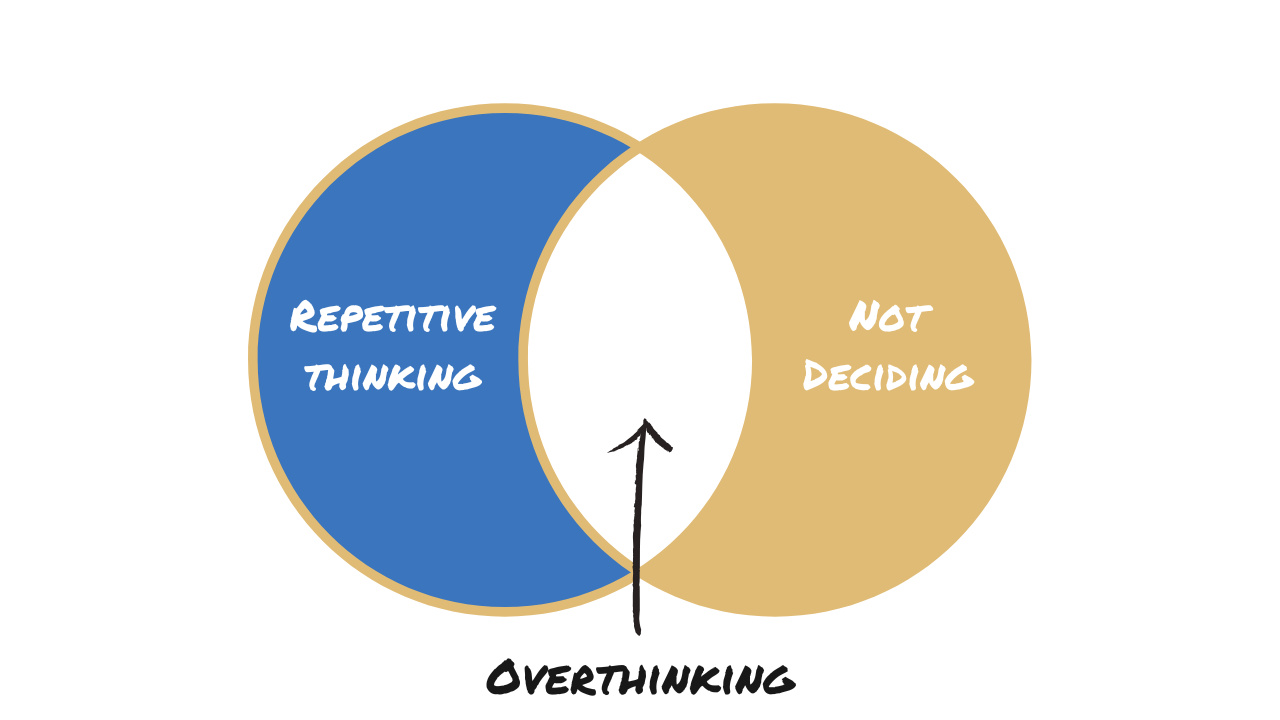
In reality, overthinking occurs because decisions are left unresolved.
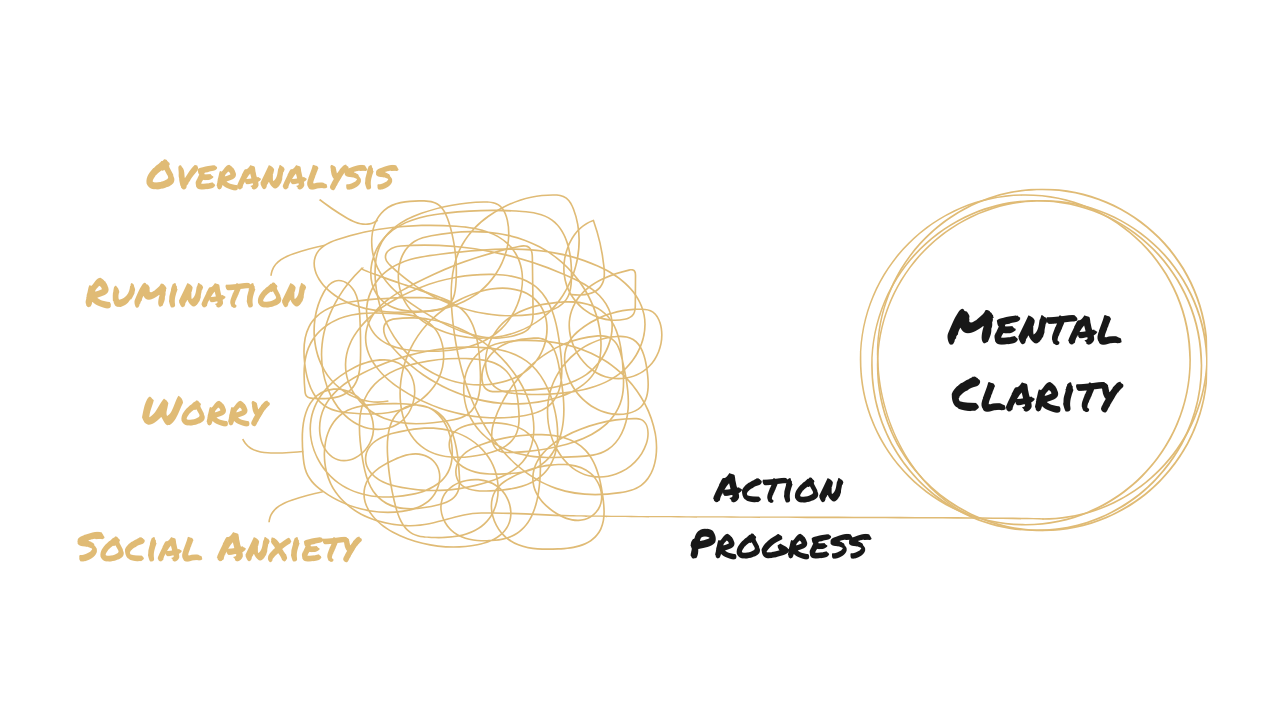
Every unresolved decision takes up mental space. Your mind keeps it open in the background, constantly reminding you to revisit the thought because it’s been tagged as unfinished.
One decision becomes two.
Two become five.
And suddenly your mind feels cluttered and overwhelmed.
Overthinking is not always about thinking too much.
It’s about carrying too many open decisions at once.
This is why overthinking decisions isn’t about analysis paralysis, but holding onto too many open loops.
Don’t Let Fear Delay Your Decisions
We often describe delay as a way to be more thoughtful with our decision-making.
But delay is usually driven by fear:
- Fear of making the wrong choice
- Fear of regret
- Fear of closing the wrong door
- Fear of being judged
- Fear of failing
- So instead of deciding, you end up postponing.
But here’s the thing. The decision does not disappear; it stays open. And over time, that decision becomes heavier, like a pressure cooker, because it now sits beside other unmade decisions.
Your mental clutter builds, focus weakens, and thinking becomes scattered. This is how fear creates overthinking. It causes you to stall and let decisions pile up and take up mental bandwidth making you feel overwhelmed.
Why Delayed Decisions Feel Heavier Over Time
An unmade decision creates tension.
Your brain treats it as unfinished business.
Each time you avoid it, your mind has to recall it again. That repeated recall adds emotional weight and cognitive load.
Now multiply that by every decision you are avoiding.
What feels like overthinking is often mental clutter, not a lack of intelligence or discipline.
And waiting longer rarely creates coherence.
It usually creates pressure.
How to Weigh Decisions Properly
Not all decisions deserve the same amount of time and attention.
But overthinking happens when your mind treats every decision as equally important.
A helpful way to conceptualize this is through decision weights.
Think about the difference between wearing a hat, having a haircut, and getting a tattoo.
Hats are easy to change
Haircuts take time to grow back
Tattoos are permanent
Most decisions are hats, some are haircuts, and very few are tattoos.
When you confuse the weight of decisions, you create unnecessary pressure.
You treat hat-level decisions like tattoos, which causes your nervous system to respond as if everything is high risk.
And that pressure slows you down and turns simple choices into mental obstacles.
Learning to assign the right weight to decisions instantly reduces overthinking.
The Reversibility Model
A simple way to assess decision weight is to ask whether a decision is reversible or irreversible. If a decision is reversible, then the cost of deciding is low, where you can adjust later.
What you have to realize is that most daily decisions are reversible, and very few are permanent. When reversible decisions are treated as irreversible, this increases your fear and reduces mental clarity.
You start to hesitate on simple choices because it’s become habitual to assign them more meaning than they deserve.
By recognizing that most decisions are reversible, your decision-making improves merely because you release the emotional pressure that you associate with them.
Mental Models Give Decisions Structure
Overthinking often happens when your thinking has no structure. Your mind keeps circling the same decision because you don’t have a clear way of thinking about it.
Mental models help with this. You can think of them as frameworks for organizing and approaching thoughts. Instead of being answers, mental models are systems for how you think about a decision.
This gives you a reliable way to identify and simplify similar decision scenarios. And this reduces emotional noise and cognitive overload because you can apply the correct framework to the right type of decision.
By knowing how to categorize a decision, your mind stops treating every choice like a new one. It gives your thinking a protocol for how to think and approach certain problems.
So rather than starting from scratch every time; rely on pattern recognition and repeatable structures for streamlining your decision-making.
Free eBook
7 proven methods to stop overthinking.
Interrupt the loop, decide without waiting to feel certain, and take action. Downloadable right on the page.
Get the free eBook
The Cost of Not Deciding
Indecision has a cost. Even when nothing appears to be happening, something is happening beneath the surface.
Your mental energy is being drained, attention is being divided, and your opportunities quietly shift.
So when you hold up decisions, you often pay later through stress, lost time, or reduced options. A delayed decision does not stay neutral, it usually becomes more expensive with time.
Prices rise
Deadlines close
Situations change
Overthinking is often your mind reacting to these hidden costs.
Just remember that not deciding is still a decision, and it often carries a higher price.
Feedback Over Perfection
We often over-index on trying to make the right decision.
But that belief is what slows us down. A better goal is to make a decision and then learn from it.
Clarity rarely comes from thinking longer. It comes from movement. When you act, you gain experience and create feedback.
And that feedback is what allows you to learn and iterate on future decisions. Waiting for perfection creates paralysis, while movement creates information.
When you prioritize imperfect action over perfect inaction, it reduces mental clutter because it closes loops and replaces imagined outcomes with real experience.
So instead of waiting until you feel ready, practice taking action even when you don’t feel fully ready.
The feedback you get will allow you to learn, iterate, and make progress.
When you prove to yourself that you can decide, adapt and grow, this is how confidence is built.
The 70 Percent Rule
Here’s a pro tip. You don’t need full certainty to move forward.
When you have roughly 70 percent of the information, action is usually the better move.
Waiting for complete clarity often leads to stagnation and paralysis. The remaining insight usually comes from doing, not from more thinking.
The goal here isn’t certainty, but to get feedback, which will help you refine your next step.
A Simple Way to Reframe Decisions
The next time you’re dwelling on a decision, instead of asking:
- “What is the perfect decision?”
- simply ask
- “What decision reduces mental weight right now and gives me feedback?”
This shift alone can free up a tremendous amount of mental capacity and put you into motion to act.
What To Do Next
If overthinking decisions has been draining your energy, clarity starts with learning how to close mental loops.
The truth is you don’t need to think more (you’ve done that enough), what you need is to add more structure to your thinking, which will allow you to compound your decision-making and momentum over time.