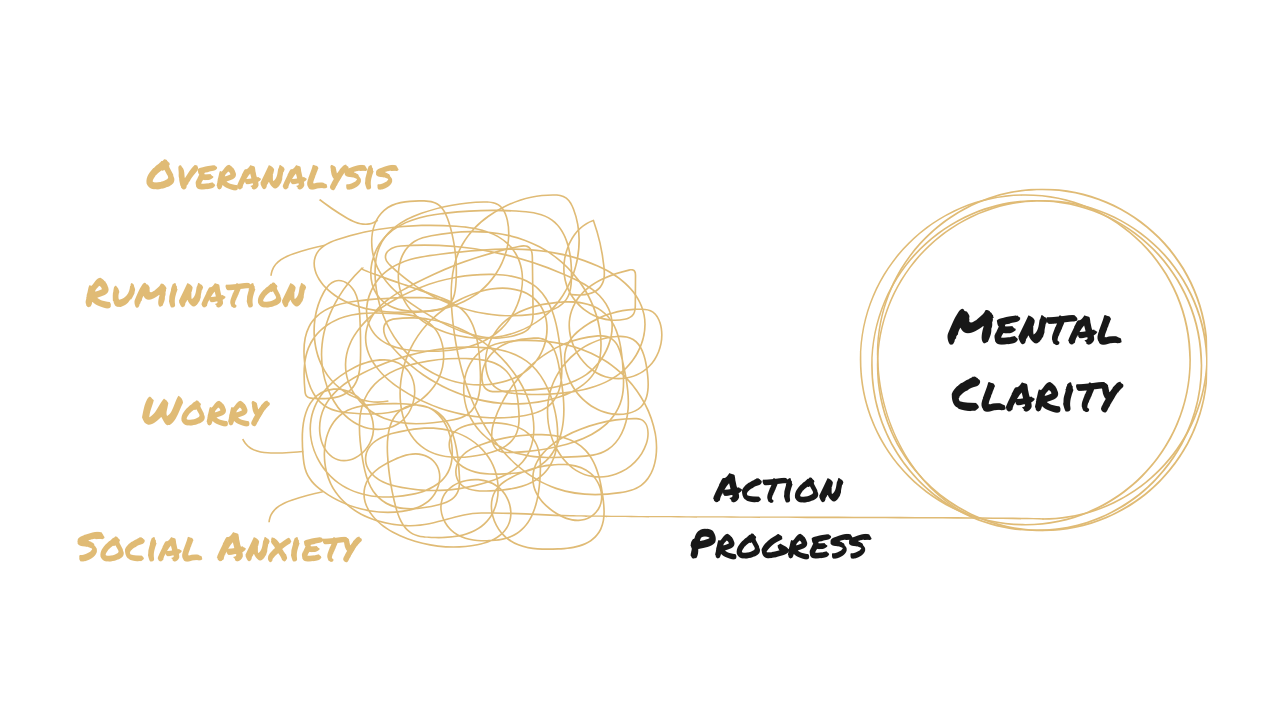
Rumination is when your mind gets stuck, constantly replaying past mistakes, awkward moments, or scenarios that don’t serve you. Instead, your brain continues to serve you repetitive thoughts, leading to negative emotions that create emotional pain and overwhelm.
In this article, we explore what rumination really is, why it happens, and four practical, proven methods to stop the spiral of negative thinking. These strategies are tools I use personally and share with my clients to increase self-awareness, reclaim mental clarity, and create space for more positive thoughts and personal growth.
What Is Rumination and Why Do We Do It?
Do you often catch yourself obsessing over something you said, a breakup that didn’t go your way, or a past decision you wish you could redo?
That’s rumination.
Rumination is when your mind loops through negative thoughts and emotions about the past without resolution. It’s like watching the same painful scene over and over again, except this time, you're both the viewer and the main character. These thoughts usually center around things you can't control, which becomes a perfect recipe for frustration and inner chaos.
I’ve caught myself stuck in those loops more times than I’d like to admit. A conversation I wish I handled better. A missed opportunity. A hurtful comment. All circling in my head like they still hold power over me today.
But the longer we stay in that mental loop, the more we feed negative thinking, and the less space and time we have for positive thoughts and productive momentum to better our situations.
That’s why developing self-awareness around these patterns is key. Once you're more self-aware of when and why you ruminate, you can start choosing different responses. You can begin to take back your mental energy.
Here are the four strategies that have helped me, and many others to stop ruminating and reclaim peace of mind.
#1 Schedule Time to Worry
Yes, you read that right.
Instead of letting worries hijack your entire day, time-box your rumination. Give yourself 10 to 15 minutes of uninterrupted space to think through what’s on your mind. Set a timer. Write it down. Say it out loud if you need to.
Your brain craves structure. When it doesn’t have it, it grasps for control, often looping through scenarios again and again…and again.
By scheduling worry time, you're giving your mind what it needs: a container. A beginning and an end.
This method helps you release that mental pressure and creates boundaries for your brain. You stop ruminating by telling your mind, “You’ll get your turn, just not right now.”
#2 Use Mindfulness and Grounding Techniques
When you're stuck in the past, the best way out is to come back to the present.
Mindfulness is all about paying attention to what’s happening right now without judgment. Grounding exercises help anchor you here in the now. Some of my favorites are:
- Noticing five things I can see, four I can touch, three I can hear, two I can smell, and one I can taste.
- Holding a cold object or running water over my hands.
- Walking barefoot on grass or sand.
These small actions remind you that you’re safe, that this moment is different from the one your brain keeps replaying.
Every time you catch your mind slipping back into negative thinking, practice mindfulness to interrupt the loop. Grounding is what reconnects you back to the present. And this is where you can begin to make real change with intention.
#3 Label Your Thoughts
This one may sound simple, but it's powerful.
When you're ruminating, ask yourself: What exactly am I thinking about?
Is it regretting a mistake? Pain from unfair treatment? Anger over something you can’t change?
Labeling the thought helps you bring structure and awareness to it. You start noticing patterns. You begin to see, “Oh, this is just my ‘self-doubt after awkward conversations’ loop again.”
That clarity makes it easier to detach and step back. You create distance between you and the thought.
The more self-aware you are about what triggers your rumination, the faster you can interrupt it before it spirals.
#4 Shift Into Solution Mode with the Circle of Control
This changed everything for me.
When you're stuck in rumination, you're often focused on problems and things that already happened (or things you can’t control). That helpless feeling fuels the loop.
So instead, shift into solution mode. And to do that, use the circle of control framework.
Visualize three circles:
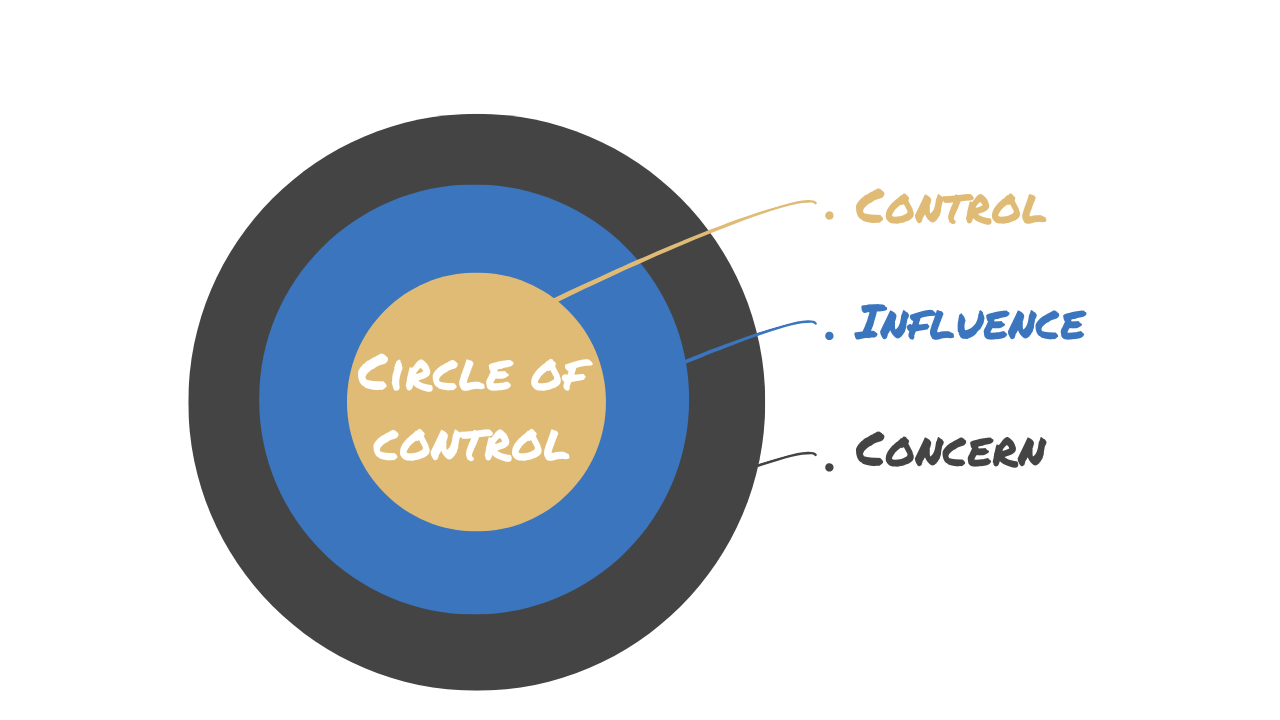
Inner circle: What you can control. Your actions, choices, habits, and mindset.
Middle circle: What you can influence. Your relationships, work dynamics, and outcomes you can nudge but not control.
Outer circle: What you’re concerned about but can’t control. These are often things that have already happened, or big picture events like the economy, the weather, or geopolitics.
When I catch myself ruminating, I ask: Which circle is this in?
Most of the time, it’s in the outer circle.
That realization helps me shift my focus back to what I can control, which is my response, my decisions, and my mindset.
Returning back to your circle of control (or influence) gives you back your power.
When you understand this model, you stop giving your energy to what drains, so you can start investing in what builds you.
Control Your Mind ( Or It Will Control You )
Rumination keeps us stuck in a place where our mind controls us. But once you become more self aware, you can start flipping the script.
You can schedule your worries, ground yourself in the present, label your thoughts, and move into action.
And through all of that, you slowly reclaim your mind.
Just remind yourself that you are not your thoughts.
You are the observer of them.
And with the right tools, you can shift from negative thinking to positive thinking, from overthinking to clarity, from being stuck in the past to moving forward with purpose.
Your personal growth starts in the small moments, like the moment you decide to no longer ruminate today.
Let me know which strategy resonates most with you. And if this helped, share this article with someone who might be looping through their own thoughts.
Sincerely,
Dexter Lam
The 5 Day Overthinking Reset
Overthinking isn't a thinking problem.
Five short emails on what's actually keeping the loop alive. The mechanism, not the motivation. Free.
Start the Reset