The way we speak to ourselves is more crucial than we think. That constant inner dialogue in our mind that follows us around, can either be our biggest fan or our harshest critic. But here’s the thing, the way we speak to ourselves is a reflection of how we see ourselves, which plays a significant role in dictating how we experience and navigate through life.
In this article, we explore the concept of self-image, the power of self-talk, and tips for how to use self-awareness to overcome a negative inner voice.
Have you ever stopped to think about how you speak to yourself? What are the keywords that come to your mind?
Have you ever caught yourself saying things like “I’m not good enough,” or “I’ll never figure this out”? Many of us hold these negative thoughts, and sometimes we don’t even realize it’s happening because we’ve made it our default setting. But the important thing to notice is how these thoughts influence our confidence, decisions, and relationships because it is a deeper reflection of how we see ourselves.
Your self-image is the mental picture you hold of yourself. It’s the impression you have about yourself, which could include your abilities, physical appearance, personality, and much more. Your self-image is built over time through your experiences, beliefs, and that inner voice you hear every day. But here's the rub, if that voice is filled with negativity, it can radiate out into every area of your life including the treatment you’re willing to accept from others, and the standards you hold for yourself.
Now on any given day, we have multiple repeating thoughts that we say to ourselves. It’s like having a song stuck in your head on repeat. But what if that song you play in your mind is a bad one? Do you let it just continue, or do you proactively choose to change the song?
This is the gravity of self-talk. Self-talk is exactly what it sounds like. It’s the running commentary in your mind that can either be positive or negative. Positive self-talk is encouraging and uplifting, while negative self-talk is overly self-critical and defeating. The question is asking yourself what you’d prefer to be playing in the background of your mind.
A little self-criticism can be healthy if it’s reflective and constructive. This type of self-talk would sound like: “I didn’t handle that conversation well. Next time, I’ll try this approach.”
But if self-criticism turns into a constant barrage of inner bullying, it becomes a hindrance that robs you of your own peace. Saying things like, “Why do I always mess up?” or “I’m such a failure,” drags you down, instead of pushing you forward.
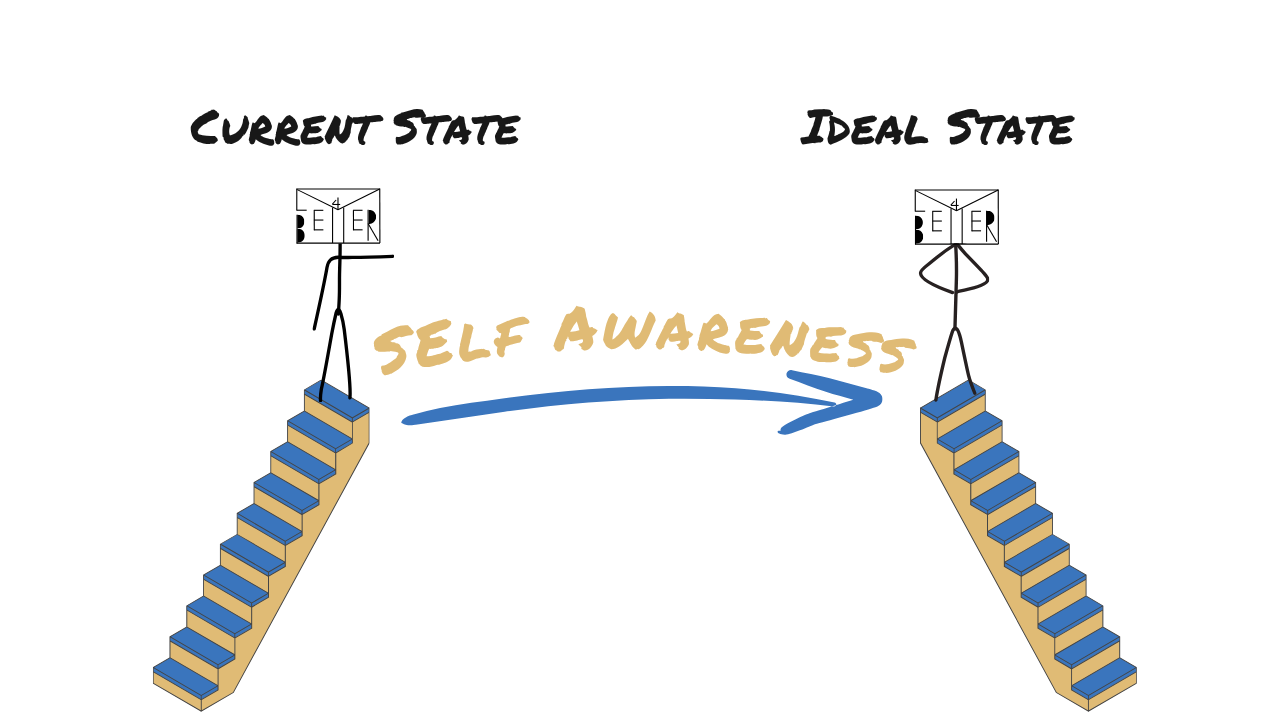
This is where having greater self-awareness is crucial, because it allows you to notice these thoughts in real-time, and intentionally choose to rewrite the script.
The key is realizing that you don’t have to live at the mercy of that inner critic. You can overcome negative self-talk using self-awareness:
The most important relationship you’ll ever have is the one you have with yourself because it sets the tone for the types of people you attract into your life. Whether these relationships are personal, professional, or romantic, they are a reflection of how you feel about and treat yourself.
For example, people with low self-worth often accept less than they deserve in relationships. They may tolerate poor treatment because deep down, they don’t believe they’re worthy of better. On the other hand, people who nurture a healthy self-image set higher standards, not out of arrogance, but out of respect for themselves.
When you start speaking to yourself with empathy and encouragement, you’ll notice a shift. This shift comes from nurturing a deep sense of self-love (the beautiful relationship you’ve developed with yourself). And what this will do is make you feel more confident, more resilient, and more grounded in your relationships.
Sincerely,
Dexter Lam
Five short emails on what's actually keeping the loop alive. The mechanism, not the motivation. Free.
Start the ResetSelf-talk is the running commentary in your mind, the constant inner dialogue that follows you around. It can be positive, encouraging and uplifting, or negative, overly self-critical and defeating. It's like a song stuck on repeat in your head. The real question is whether you let a bad song keep playing or choose to change it.
Your self-talk is a reflection of how you see yourself, and that self-image shapes your confidence, decisions, and relationships. If your inner voice is filled with negativity, it radiates into every area of your life, including the treatment you're willing to accept from others and the standards you hold for yourself. That's why it's worth taking seriously.
Your self-image is the mental picture you hold of yourself: your abilities, physical appearance, personality, and more. It's built over time through your experiences, beliefs, and the inner voice you hear every day. Many of us run thoughts like "I'm not good enough" without noticing, because we've made that negative voice our default setting.
Three steps. First, practice mindfulness so you can notice thoughts in real time without judgment. Second, pause and replace: ask whether a thought is helpful or harmful, then swap it for something encouraging. Third, treat yourself with kindness, the way you'd support a struggling friend. Self-awareness lets you catch the script and intentionally rewrite it.
No. A little self-criticism is healthy when it's reflective and constructive, like "I didn't handle that conversation well. Next time, I'll try this approach." It becomes a problem when it turns into a constant barrage of inner bullying, like "Why do I always mess up?" That kind drags you down instead of pushing you forward.
Mindfulness is about being fully present in the moment. When you're present, it's easier to notice your thoughts without judgment, merely as an observer. That's the mechanism: you can't change a script you never hear. Paying attention to your inner dialogue lets you pick up on negative self-talk as it happens, which is when you can interrupt it.
Pause, see the thought for what it is, unkind words to yourself, then replace it with something encouraging, like "I'm learning and improving each time." The swap isn't about pretending. It's about choosing self-talk that pushes you forward instead of dragging you down, and repeating it until it becomes your new default.
Most of us would never criticize a struggling friend or child the way we criticize ourselves; we'd offer empathy and support. The harsh inner voice usually became your default setting so gradually you stopped noticing it. The shift is simple to state and takes practice: offer yourself the same grace and encouragement you'd give someone you love.
The most important relationship you'll ever have is the one with yourself, because it sets the tone for the types of people you attract. People with low self-worth often accept less than they deserve and tolerate poor treatment, believing they're not worthy of better. A healthy self-image sets higher standards, not out of arrogance, but self-respect.
Yes, with self-awareness and repetition. You don't have to live at the mercy of that inner critic. When you start speaking to yourself with empathy and encouragement, you nurture self-love, and you'll notice a shift: more confidence, more resilience, and more grounding in your relationships. It's a practice you build, not a one-time fix.