Have you ever found yourself getting into a heated discussion with someone and in the moment the conversation escalates from chill to heated? You feel the need to stubbornly defend your position, when in reality, your ego is just taking a hit and you won’t let it go (to save face). Instead of being calm and nonchalant, like a bull circling a matador, you continue to charge (again and again) only to be elusively mocked by the waving red flag that escapes you. In the pursuit of creating a better life for myself, I've been examining my ego closely and observing how it has (and is) negatively impacting my relationships. It can be hard to be an objective critic of ourselves, but in your own life, do you believe you have a big ego? If the answer is “yes”, does your ego have the net effect of serving you and your relationships positively? In this article, I'm going to be exploring how to identify whether you have a big ego, where it can be holding you back, and steps you can take to manage it…….if you have one that is…….
In Psychology, the term “ego” refers to a person’s sense of self-esteem or self-importance, and is considered the voice of reason. According to Sigmund Freud, the ego is one of the three parts of the psyche, in addition to the id (our primal and instinctual desires) and superego (our moral and societal standards).
I want to clarify that for the purposes of this article, I'm referring to ego as what many call having a “big ego”, “inflated ego”, or “excessive ego” that ultimately stems from insecurity, an exaggerated sense of importance and superiority.
Now to understand a big ego, we first need to understand how it plays out in the real world. Here are 9 indicators of an inflated ego that you might (ahem) see in yourself and others:
Having a big ego matters because it negatively impacts the quality of your relationships, decision-making, and ability to develop personally. It adds an unneeded filter that makes you focus any situation back to your own perceived self-importance, which creates a gap between what you believe you deserve and what you actually deserve. The over-sense of self begins to blur the lines between true self-confidence and arrogance, where the very desire of wanting to come off strong makes you fragile and emotionally reactive to external circumstances. You take yourself way too seriously and it ends up weighing you down in the process.
The excessive ego causes you to be socially alienated because people around you find it hard to interact with someone who is constantly self-absorbed (you don’t want to be that person who is difficult to be around……and doesn’t even know it)! The net effect is that your ego makes it difficult for you to adapt to change because your ego prevents you from acknowledging your mistakes or seeking help. The irony is that your inflated ego can end up replacing a sense of true self-esteem, which is actually what you need. Now in an attempt to have a balanced perspective, here are some negative and positive effects of having an ego:
To overcome a big ego, we need to be able to pinpoint it and see it for what it is (call a spade a spade). It’s about being honest with ourselves and really doing a deep dive to reflect on our past and current behaviors to see whether we have strong traits that fit the description of what we want to overcome. Trust me when I say that I still have a huge ego and it certainly gets the best of me at times. For what it’s worth, I want to share some tips that might help you to manage your ego so you can grow personally:
Observing your ego is extremely useful because it allows you to know where you aren't free. Shaping behavior isn’t always easy, it can be a slow and steady grind of intentionally applying it in our daily habits and routines. Like anything in life, it takes practice and is not that immediate 180 we are looking for. It just starts with baby steps……maybe you need to apologize or make amends with someone by just acknowledging your mistakes and showing that you are willing to rebuild a damaged relationship.
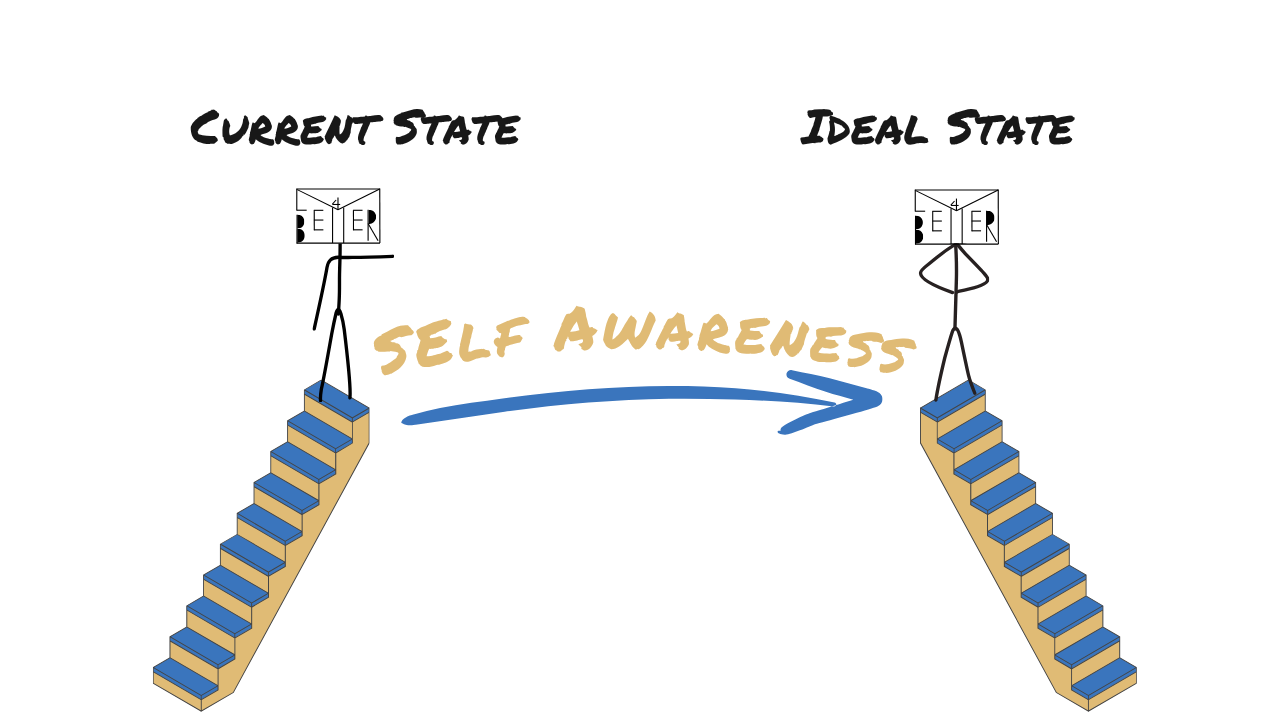
At the end of the day you have to think for yourself and decide what you believe in. Challenge and test the way you think and be honest with what you uncover. Setting aside a big ego takes self-awareness, introspection, and a willingness to change. Some of us may be aware but not willing, while others may be willing but not aware. The key is to be able to identify a big ego as it’s happening (in real-time) and to take a mental inventory of your mind to see whether your current identity is serving you. The first step towards personal development and improved well-being comes from the way we think and then act.
Through Letter for Better, my intention is to help you discover nuggets of information that you can reflect and apply in your own life to ultimately improve your relationships and nurture positive psychology. I hope that you can find a healthy balance in your self-worth, outlook, and sense of purpose. If you found this article useful please don’t forget to share it with someone who might need to hear this :)
Sincerely,
Dexter Lam
Five short emails on what's actually keeping the loop alive. The mechanism, not the motivation. Free.
Start the ResetIn psychology, ego refers to your sense of self esteem or self importance, considered the voice of reason. Sigmund Freud described it as one of three parts of the psyche, alongside the id, your primal instincts, and the superego, your moral standards. When people say big ego though, they usually mean an inflated sense of superiority rooted in insecurity.
Watch for the patterns: interrupting and dominating conversations, getting defensive at criticism, constant self promotion, arrogance, one upping others, ignoring rules you feel don't apply to you, struggling to collaborate, unhealthy competitiveness, and refusing to compromise. Even feeling the internal urge to one up someone counts. Honest self reflection is the only way to spot these in yourself.
No, and the line matters. True confidence lets you be assertive, take calculated risks, and bounce back from setbacks. An inflated ego blurs that line into arrogance. The irony is that wanting to come off strong actually makes you fragile and emotionally reactive. An excessive ego can end up replacing the genuine self esteem you actually need.
An inflated ego adds a filter that bends every situation back to your own self importance. People find it hard to interact with someone who's constantly self absorbed, so you become socially alienated, often without knowing it. It also blocks empathy, creates unnecessary conflict, and stops you from acknowledging mistakes or seeking help when relationships get strained.
Your ego is taking a hit and it won't let go, so you defend to save face, like a bull charging a matador. The shift is seeing criticism as a learning opportunity instead of an attack. And remember there's a difference between getting offended and simply disagreeing with an opinion. One is reactive, the other is reasoned.
Yes. An inflated ego ultimately stems from insecurity and an exaggerated sense of importance and superiority. It creates a gap between what you believe you deserve and what you actually deserve. The need for constant validation, praise, and recognition is the tell: genuine self esteem doesn't require an audience, but a fragile ego constantly does.
An inflated ego clouds judgment. You make biased, impulsive decisions that protect your self image instead of rational, objective ones, which leads to poor choices and missed opportunities. It also blocks learning, because you can't absorb constructive feedback you refuse to hear. Managing your ego isn't just about relationships, it directly improves the quality of your thinking.
A healthy, balanced ego, yes. It gives you confidence in your abilities, a backbone when your input matters, resilience after setbacks, and a positive self image that supports your wellbeing. The problem is the inflated version. The goal isn't killing your ego, it's finding a healthy balance in your self worth, outlook, and sense of purpose.
Four practices: self reflect daily on how you act and react emotionally, seek and accept constructive criticism, develop humility by acknowledging your limitations, and surround yourself with good, supportive people. Observing your ego is useful because it shows you where you aren't free. It's a slow, steady practice of applying awareness in daily habits, not an immediate 180.
Acknowledging your limitations is freeing because you allow yourself to be human and imperfect. Showing vulnerability is an act of courage, and that courage gives you real self esteem grounded in your positive intentions rather than in appearing superior. A big ego blocks growth by rejecting feedback; humility opens the door to actually learning from it.